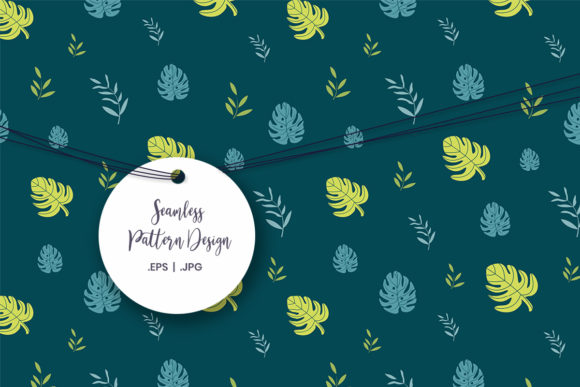
Botanical Leaves Seamless Pattern
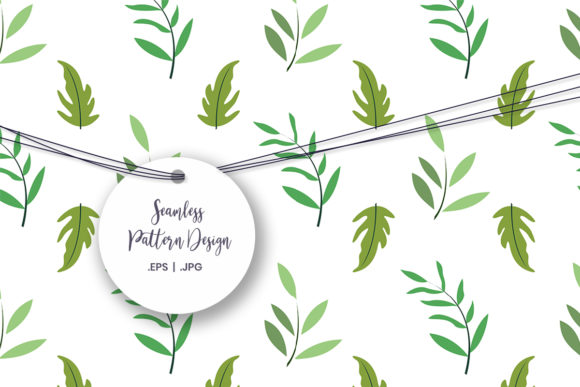
A Botanical Leaves Seamless Pattern is more than a decorative asset—it’s a functional design element engineered for continuity, versatility, and real-world application. Unlike standalone illustrations or clipped motifs, this pattern repeats infinitely in all directions without visible seams, making it ideal for projects where scale, consistency, and professional finish matter. It bridges the gap between visual appeal and practical utility—whether you’re preparing materials for a classroom activity, producing branded packaging, or designing digital assets for client deliverables.
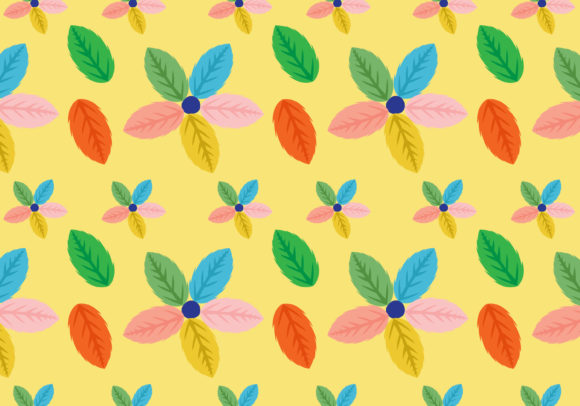
This particular Botanical Leaves Seamless Pattern features organic, hand-drawn foliage rendered with balanced density and natural spacing. Its rhythm supports readability when layered with text, avoids visual fatigue at large scales, and retains clarity even when resized down for labels or up for wall decals. Because it’s built as a true seamless tile, it eliminates manual tiling effort, reduces errors in alignment, and saves time during layout phases across both print and digital workflows.
Where It Fits in Your Workflow
The Botanical Leaves Seamless Pattern integrates most effectively when placed early in your planning cycle—not as an afterthought, but as a foundational layer. For example, educators building seasonal lesson kits might select this pattern before finalizing printable worksheets, ensuring all handouts share cohesive visual language. Similarly, small business owners launching a new product line can use it to unify packaging, social media banners, and email headers from day one—avoiding costly redesigns later.
During execution, its seamless nature means fewer technical interruptions. Designers using Adobe Illustrator or Affinity Designer can apply it as a swatch and scale it across artboards without repositioning or blending modes. In Canva or PowerPoint, the high-resolution JPG version serves reliably as a background behind transparent text boxes or photo overlays—no pixelation, no edge artifacts. Even non-designers benefit: hobbyists printing custom wrapping paper simply drag the file into their home printer software, select “tile” mode, and go.
Practical Use Cases Across Roles
Different users engage with the Botanical Leaves Seamless Pattern in ways that reflect their priorities:
- Scrapbookers and crafters use it as a base for layered paper collages—printing on cardstock, cutting shapes, and combining with textured elements like twine or pressed leaves.
- Teachers and homeschoolers embed it into editable PDFs for themed reading logs, behavior charts, or vocabulary cards—its botanical theme reinforces science units while maintaining visual calm.
- Entrepreneurs and marketers apply it to invoice backgrounds, presentation decks, or downloadable lead magnets—subtly reinforcing brand warmth and approachability without competing with core messaging.
- Event planners and DIY hosts adapt it across touchpoints: scaled down for place cards, full-bleed for invitation suites, or repeated as a border on printable signage.
- Bloggers and content creators use the EPS 10 file to generate consistent featured image templates—applying color overlays in Photoshop to match seasonal palettes while preserving leaf structure and flow.
File Formats and Real-World Compatibility
You’ll receive the Botanical Leaves Seamless Pattern in two optimized formats: EPS 10 and high-resolution JPG. Each serves distinct purposes—and understanding their strengths prevents workflow bottlenecks.
The EPS 10 file is vector-based, meaning it scales infinitely without quality loss. It works natively in Adobe Illustrator, CorelDRAW, and InDesign. Use it when precision matters: aligning pattern repeats with trim marks for commercial printing, exporting SVGs for web use, or adjusting individual leaf strokes for custom variations. Because it’s saved in EPS 10 (not newer versions), it maintains backward compatibility with older design software—critical for shared team environments or freelance handoffs where version control isn’t guaranteed.
The JPG file is delivered at 300 DPI and sized to tile cleanly across standard US letter (8.5 × 11 in) and A4 dimensions. It’s ideal for quick integration into tools like Google Slides, Microsoft Word, Cricut Design Space, or Silhouette Studio—no conversion needed. While not editable at the path level, its resolution ensures crisp output whether printed on a home inkjet or sent to a local print shop.
Note: Colors on screen may vary slightly from physical output due to monitor calibration and printer profiles. For critical color matching—especially in branding or product packaging—test print a small section first using your intended paper stock and printer settings.
Efficiency and Consistency Tips
To maximize efficiency, treat the Botanical Leaves Seamless Pattern as a reusable system component—not a one-off download. Store both files in a clearly labeled folder within your master resource library (e.g., “Patterns > Botanical > Seamless”). Name versions explicitly: “BotanicalLeaves_Seams_JPG_300DPI_A4” and “BotanicalLeaves_Vector_EPS10”. This reduces search time and avoids accidental duplication across projects.
For long-term consistency, define a limited palette of 2–3 accent colors that complement the pattern’s natural tones. Apply those consistently across related assets—say, olive green for headings, cream for body text, and terracotta for call-to-action buttons. That small discipline creates cohesion across otherwise disparate outputs: a greeting card, a party invitation, and a set of printable labels will feel like parts of the same family.
When sharing files with collaborators, include a brief usage note: “This pattern tiles seamlessly—no need to adjust repeat settings. For best results in Illustrator, add as a Swatch; in Canva, upload as background image and set to ‘Original’ size.” Clear, concise guidance prevents misapplication and preserves your intended aesthetic.
Quality Control and Long-Term Use
Because seamless patterns rely on precise edge alignment, inspect your output at 100% zoom before finalizing any print job. Look specifically at corners and midpoints—any faint lines or tonal shifts indicate improper tiling or compression artifacts. The included JPG has been pre-tested for clean repetition, but third-party platforms (like some online print services) sometimes auto-resize or compress uploads. If you notice seam visibility post-upload, re-export the JPG using “Save for Web” settings with maximum quality and no subsampling.
Over time, revisit how the Botanical Leaves Seamless Pattern performs across contexts. Does it hold up equally well on matte vs. glossy stock? Does it enhance or distract when paired with handwritten fonts? Track these observations in a simple spreadsheet or notes app. That data informs future pattern selections and builds institutional knowledge—even if you’re working solo.
Finally, consider accessibility. While the pattern itself is visual, its use should support—not hinder—readability. Maintain sufficient contrast between foreground text and the leaf background (minimum 4.5:1 for normal text). Avoid placing light-colored type directly over dense leaf clusters; instead, use subtle drop shadows, semi-transparent overlays, or strategically placed white space blocks to ensure legibility.
Integrating the Botanical Leaves Seamless Pattern isn’t about adding decoration—it’s about embedding intentionality into your output. Whether you’re preparing a child’s craft kit, launching a boutique product, or streamlining your content pipeline, this pattern functions as quiet infrastructure: reliable, adaptable, and ready when your next practical need arises.