Cute Pastel Unicorn Fabric Pattern
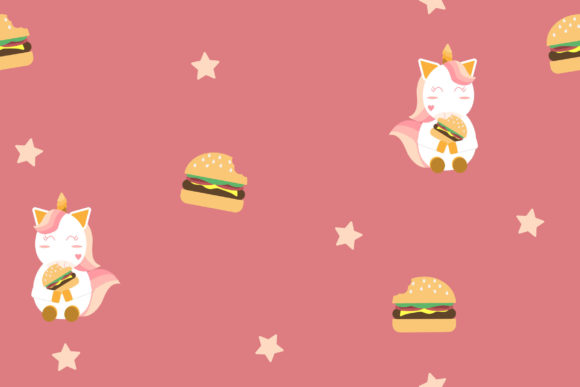
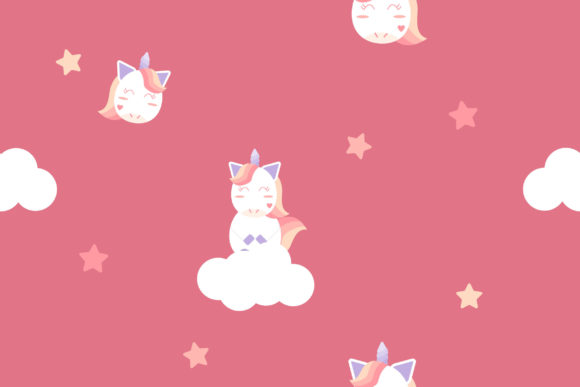
The Cute Pastel Unicorn fabric pattern is a repeatable, seamless design featuring stylized unicorns rendered in soft pastel tones—think blush pinks, mint greens, lavender lavenders, and buttery yellows—paired with delicate pastel stars. It is optimized for textile use, with a 1:1 square aspect ratio to support consistent tiling across garments, home décor, and craft projects. The pattern includes editable vector files (AI and EPS) as well as a high-resolution JPG, enabling flexibility for both digital editing and physical production.
What Makes This Pattern Distinctive?
Unlike generic unicorn motifs or overly saturated fantasy graphics, the Cute Pastel Unicorn pattern emphasizes subtlety and cohesion. Its seamless construction means no visible seams or misaligned edges when tiled, which is essential for professional-grade fabric printing. The pastel palette avoids visual intensity, supporting versatility across age groups and settings—from children’s apparel to adult-oriented stationery or minimalist nursery textiles. The inclusion of editable AI and EPS files allows users to adjust colors, scale elements, or isolate components without quality loss—capabilities not available in raster-only assets.
Who Might Choose This Pattern—and Why?
Designers, small-batch makers, and hobbyists often seek patterns that balance aesthetic appeal with technical reliability. A user evaluating the Cute Pastel Unicorn may be developing a line of baby rompers, designing custom tote bags for a boutique, or producing limited-run wallpaper samples. The pattern suits contexts where gentle, gender-neutral whimsy is appropriate—such as pediatric clinics, Montessori classrooms, or eco-conscious lifestyle brands emphasizing calm and playfulness.
Its 1:1 ratio simplifies integration into common design workflows: it fits standard fabric printing templates, works directly in textile CAD software, and scales predictably for both small accessories (like hair clips or patch sets) and large-format applications (such as quilting panels or curtain fabrics).
Benefits to Consider
- Production-ready format: The seamless repeat eliminates manual tiling effort and reduces risk of alignment errors during printing.
- Editability: Vector files (AI/EPS) permit color adjustments, resizing, or extraction of individual unicorns or stars for use in logos, embroidery digitizing, or layered prints.
- Color harmony: Pastel tones are widely compatible with natural fibers (cotton, linen, bamboo) and digital printing processes that render subtle gradients accurately.
- Licensing clarity: When sourced from reputable providers, this type of pattern typically permits commercial use—important for entrepreneurs planning resale.
Tradeoffs and Practical Considerations
While the Cute Pastel Unicorn pattern offers strong utility, it is not universally optimal. Its soft tonal range may lack contrast on light-colored fabrics, potentially requiring a base layer or pre-treatment for vibrancy. Users working with heat-transfer vinyl or sublimation must verify that the pastel hues translate accurately under their specific printer and substrate combination—some pastels shift toward grey or mute under certain thermal conditions.
The 1:1 ratio, while convenient, limits layout flexibility for directional or vertical-repeat applications (e.g., scarves or floor-length drapery), where a 2:1 or 3:1 repeat might better suit drape and visual rhythm. Additionally, because the design leans into a specific aesthetic niche—gentle, dreamy, and youthful—it may not align with brands pursuing bold, graphic, or mature visual identities.
When This Pattern Is a Strong Fit
The Cute Pastel Unicorn excels in scenarios where consistency, scalability, and aesthetic cohesion matter more than maximal visual impact. It is especially suitable for:
- Small-scale textile producers needing reliable, print-ready files without hiring a designer to build a custom repeat.
- Educators or therapists creating sensory-friendly materials—its low-contrast palette and rounded shapes reduce visual overload.
- DIY crafters using home printers or local print-on-demand services that accept AI/EPS uploads and require exact repeat specifications.
- Brands launching seasonal collections centered on spring, renewal, or childhood themes—where pastel palettes reinforce messaging without overt age targeting.
When Alternatives May Be Worth Exploring
If your project requires higher contrast, greater realism, or cultural specificity (e.g., unicorns drawn in Japanese kawaii, Scandinavian minimalism, or Art Nouveau styles), a custom illustration or curated marketplace asset with matching stylistic intent may serve better. Similarly, if your workflow relies exclusively on raster-based tools (e.g., Photoshop for screen printing separations), an AI file alone won’t streamline production—look for packages that include layered PSDs or spot-color separations.
For large-volume manufacturing, verify whether the provided JPG resolution (typically 300 DPI at original dimensions) meets your printer’s minimum requirements for wide-format output. Some industrial fabric printers demand TIFFs or specialized color profiles (e.g., Pantone libraries), which this package does not inherently include.
Making an Informed Decision
To determine whether the Cute Pastel Unicorn aligns with your needs, begin by auditing your technical constraints: What file formats does your printer accept? Does your design software support AI/EPS imports? What fabric types and printing methods will you use—and how do they handle light pastels?
Next, assess aesthetic compatibility. Print a physical swatch or mockup at actual size. View it under varied lighting (natural daylight, warm indoor bulbs) to gauge tone fidelity. Compare it alongside existing brand assets—if your logo uses sharp sans-serif typography and saturated primaries, this pattern may visually undercut consistency.
Finally, consider scalability beyond the immediate project. Vector files allow future adaptation: swapping stars for moons, adjusting unicorn spacing, or converting the motif into a monochrome embroidery file. If long-term reuse or derivative work is likely, the editability justifies attention to file structure and layer naming—check whether the AI file is organized with labeled layers and ungrouped elements.
Conclusion
The Cute Pastel Unicorn fabric pattern offers a practical, aesthetically coherent option for creators seeking a ready-to-use, seamless textile motif with thoughtful color and composition. Its value lies not in novelty alone, but in functional execution: the 1:1 ratio, editable vectors, and harmonized pastel star-and-unicorn arrangement reduce friction in production. However, its suitability depends on alignment with material choices, technical workflows, and brand context—not just visual preference. Evaluating it against concrete project requirements, rather than general appeal, leads to more effective and sustainable design decisions.