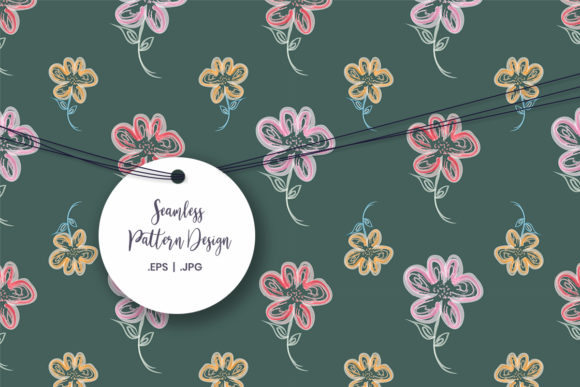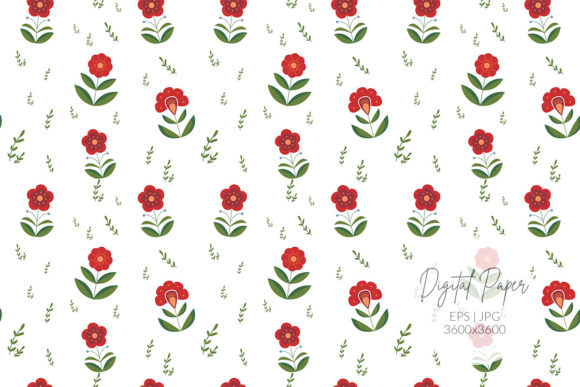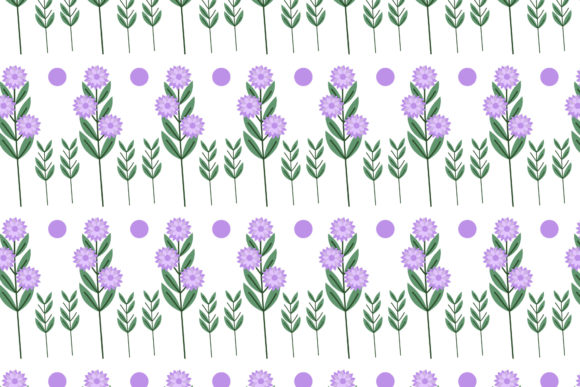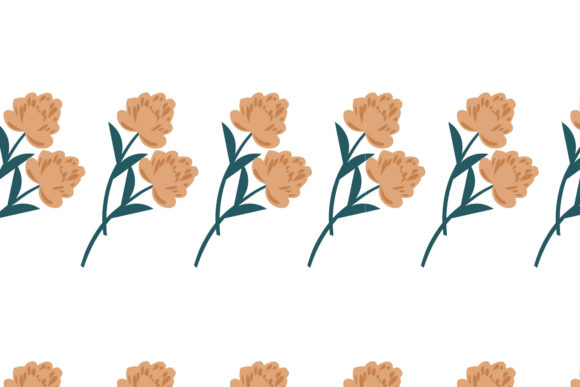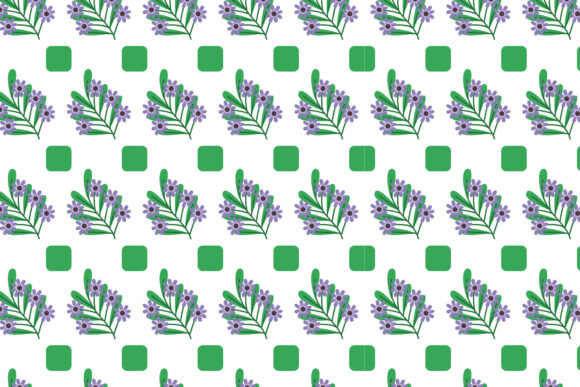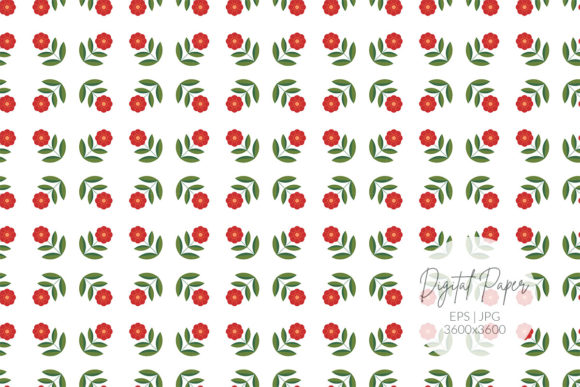
Flower Seamless Pattern
A Flower Seamless Pattern is a digital design composed of floral motifs arranged so that the edges align perfectly when tiled—meaning it repeats horizontally and vertically without visible seams or breaks in continuity. This technical characteristic makes it highly functional across a range of creative applications, from physical crafts to digital publishing.
Unlike standalone floral illustrations or isolated clipart, a seamless pattern is built with repeat logic in mind: the top edge matches the bottom, the left edge matches the right, and all transitions between tiles appear natural and uninterrupted. The version described—3600 × 3600 px in JPG and EPS 10 format—is optimized for both high-fidelity print and scalable vector use, supporting flexibility in resizing and editing.
Why Consider a Flower Seamless Pattern?
People often seek a Flower Seamless Pattern when they need consistent, decorative coverage across surfaces or layouts without investing time in manual tiling or alignment. It’s especially relevant for those working on projects where repetition is required—such as wallpaper design, fabric printing, scrapbook paper backgrounds, or social media templates—and where visual cohesion matters.
Common motivations include:
- Need for a ready-to-use, professionally constructed pattern that avoids pixelation or misalignment at scale;
- Desire to maintain brand or aesthetic consistency across multiple deliverables (e.g., matching cards, banners, and presentation slides);
- Limited access to design tools capable of building custom seamless patterns from scratch;
- Tight timelines that make hand-drawn or coded tiling impractical.
Practical Benefits and Realistic Expectations
The included Flower Seamless Pattern offers two complementary file types: a high-resolution JPG (3600 × 3600 px) and an editable EPS 10 vector file. Each serves distinct purposes.
The JPG provides immediate usability—it loads quickly, opens in nearly any image editor or layout program, and displays consistently across devices. Its resolution supports sharp output up to approximately 12 × 12 inches at 300 dpi, making it suitable for printed cards, small posters, or digital overlays.
The EPS 10 file retains vector scalability—meaning it can be enlarged infinitely without quality loss—and allows for color adjustments, element isolation, or integration into larger vector-based designs (e.g., logos, packaging mockups). However, EPS compatibility varies by software; newer versions of Adobe Illustrator support it well, but some free or web-based editors may not open or edit it reliably.
It’s important to note that while the pattern is seamless, its visual density, scale, and color palette are fixed. Users cannot alter the arrangement of individual flowers or change spacing without reworking the tile—tasks requiring vector editing expertise or dedicated pattern-making tools.
Situations Where This Pattern Is a Strong Fit
A Flower Seamless Pattern like this one works well when the project calls for:
- Consistent background treatment: For example, designing a set of matching greeting cards where each card uses the same floral base but different text or focal imagery;
- Print-on-demand projects: Creating custom notebook covers, phone cases, or fabric swatches where repeat behavior must be predictable and edge-free;
- Time-constrained digital work: Building Instagram story templates or Pinterest pins where speed and visual polish are priorities;
- Beginner-friendly design tasks: Users new to graphic software who want professional-looking results without mastering complex tiling workflows.
In these contexts, the convenience of a pre-built, tested seamless file outweighs the need for deep customization.
When Alternatives May Be Worth Exploring
This Flower Seamless Pattern may be less suitable if your goals involve:
- Highly specific color matching: While the EPS allows recoloring, the original palette is fixed. If you require Pantone-matched tones or CMYK-optimized gradients, verifying color fidelity before production is essential;
- Custom motif composition: If your project needs particular flower types (e.g., only native wildflowers), seasonal accuracy, or culturally specific symbolism, a generic floral pattern may lack relevance;
- Dynamic scaling across varied aspect ratios: Though seamless, the 1:1 square tile may require cropping or repositioning when applied to wide banners or tall social posts—some trial-and-error is expected;
- Commercial licensing beyond standard use: Always review the license terms. Some pattern bundles restrict use in resale templates or SaaS platforms unless an extended license is purchased.
For users needing greater control, alternatives include generating custom patterns using tools like Adobe Illustrator’s Pattern Maker, Affinity Designer’s Repeat Tool, or online services such as Patternodes. These options allow full manipulation of scale, spacing, rotation, and layering—but require time, skill, and software access.
Making a Practical Decision
To determine whether this Flower Seamless Pattern meets your needs, consider three factors:
- Use case alignment: Does your project rely on repeated background coverage rather than singular focal graphics? If yes, a seamless pattern adds efficiency.
- Technical capacity: Do you have software that supports EPS editing—or is a ready-to-place JPG sufficient? Match the file type to your workflow, not just ideal capabilities.
- Design specificity: Are the flower style, line weight, and color harmony compatible with your broader visual direction? Preview the pattern at actual size, not just thumbnails, to assess balance and legibility.
Testing the pattern in a mock context—such as placing it behind sample text or overlaying it on a product template—offers clearer insight than evaluating it in isolation. Also, compare it against other patterns in the same collection or category: differences in bloom density, stem complexity, or negative space can significantly affect readability and versatility.
Finally, keep long-term reuse in mind. A well-chosen Flower Seamless Pattern can serve across multiple projects over time—reducing repetitive design labor—while one selected solely on trend appeal may feel dated or mismatched in future work.