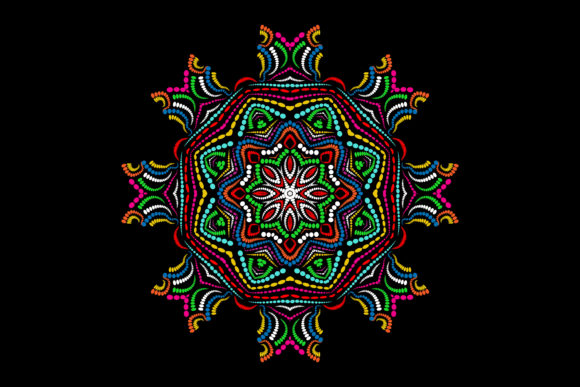
Mandala Pattern Octagon Star Sunflowers
If you've searched for elegant, versatile, and culturally resonant design assets, you’ve likely encountered the Mandala Pattern Octagon Star Sunflowers. This isn’t just another decorative motif—it’s a harmonious fusion of geometry (the octagon), celestial symbolism (the star), and organic warmth (sunflowers)—all arranged in the meditative symmetry of a mandala. Whether you're hand-painting henna, designing wedding stationery, printing fabric for tablecloths, or cutting vinyl for wall art, this pattern delivers both visual impact and functional flexibility.
Why This Design Stands Out—And Why It’s Often Misunderstood
Many assume “mandala” means only circular, floral, or Sanskrit-inspired motifs—but the Mandala Pattern Octagon Star Sunflowers expands that idea thoughtfully. Its octagonal framework adds architectural stability; the star brings radiance and focus; sunflowers introduce approachability and natural joy. That balance makes it unusually adaptable across contexts—from boho-chic weddings to modern textile studios.
Yet creators often overlook one critical detail: not all mandala files are created equal. A JPEG may look beautiful on screen, but it won’t scale cleanly for large-format prints or laser-cut stencils. An AI file is essential for precision editing—but only if it’s built with clean vector paths, not traced raster art. We’ve seen too many designers download low-resolution “vector” files only to discover jagged edges at 24 inches, or layers that can’t be recolored without breaking alignment.
1. Assuming “Vector” Means “Ready for Any Use”
Just because a file has an .AI extension doesn’t guarantee professional-grade construction. Some sellers embed raster images inside AI files—or use ungrouped, overlapping shapes that shift when resized. That leads to misaligned petals, distorted stars, or inconsistent line weights in final output.
Better approach: Before purchasing, ask for a screenshot of the Layers panel or request a 100% zoom preview of the vector paths. Look for named, organized layers (e.g., “Star Core,” “Sunflower Petals,” “Octagon Frame”) and smooth Bézier curves—not pixelated outlines or auto-traced artifacts.
2. Overlooking Color Mode and Transparency Needs
For screen use—like digital invitations or social media graphics—RGB works fine. But for print (fabric, paper, signage) or physical crafting (vinyl cutting, embroidery digitizing), CMYK color mode and proper transparency handling matter. A file designed in RGB with blending modes may shift dramatically on press—or fail entirely in cutting software that reads only solid black paths.
Better approach: Check the product description for explicit color-mode notes. If you’re using it for sublimation printing or heat-transfer vinyl, confirm the file includes a clean black-and-white version with no hidden grayscale layers or soft shadows. Most reliable Mandala Pattern Octagon Star Sunflowers packages include both RGB and CMYK versions—and a separate high-contrast outline layer for cutting machines.
3. Ignoring Scale Context and Intended Application
Sunflowers vary widely in petal count, stem length, and center density. A mandala optimized for a 4-inch henna stencil needs tighter spacing and bolder outlines than one meant for a 60-inch table runner. Using the same file across scales without adjustment risks visual clutter (too much detail at large size) or loss of identity (too sparse at small size).
Better approach: Review the file’s native dimensions and recommended use cases. Reputable creators specify minimum and maximum effective sizes—for example, “Optimized for 6–24 inch diameter outputs.” If your project falls outside that range, ask whether the designer offers scalable variants or custom adjustments. Many do—especially for commercial clients ordering bulk wedding supplies or retail packaging.
What to Verify Before You Download or Buy
Before committing—even if the preview looks perfect—take two minutes to check these five points:
- File integrity: Does the package include both JPEG (for quick reference) and native AI (for full editability)? Are fonts outlined or replaced with vector shapes?
- License clarity: Is personal use covered? What about small business applications—like selling printed napkins or offering henna sessions using the design? Look for terms like “commercial license” or “extended license,” not vague phrases like “for creative projects.”
- Compatibility notes: Does it specify Adobe Illustrator versions supported? Older AI files may not open in newer CC releases without conversion errors.
- Design intent: Are sunflowers stylized for recognition (distinct seeds, curling petals) or abstracted for pattern flow? Choose based on your audience—if you’re designing for children’s knits, friendlier, bolder forms work better than hyper-detailed botanical accuracy.
- Support responsiveness: A quick pre-purchase question (“Can I recolor individual petals?”) reveals whether the creator understands real-world usage—and stands behind their work.
Real-World Uses That Shine—When Done Right
A small-batch textile entrepreneur used the Mandala Pattern Octagon Star Sunflowers to create limited-edition tablecloths for summer weddings. She avoided scaling issues by starting with the AI file’s original 18-inch canvas, then duplicating and tiling it with 0.5-inch seamless bleed—ensuring no visible repeats. Another educator adapted the star-octagon framework into a classroom mindfulness activity, printing simplified outlines for students to color while discussing symmetry and growth patterns in nature.
What ties these successes together isn’t just aesthetics—it’s intentionality in selection and adaptation. The design supports meaning *and* function, but only when matched thoughtfully to material, scale, and purpose.
Final Thought: Let the Pattern Serve Your Purpose—Not the Other Way Around
The Mandala Pattern Octagon Star Sunflowers is more than decoration. It’s a tool—one that gains value through how well it integrates into your workflow, audience needs, and production reality. Avoid treating it as a “plug-and-play” shortcut. Instead, treat it like a collaborator: test its limits, understand its structure, and adapt it with respect for both craft and context. When you do, you’ll find it does far more than fill space—you’ll find it helps tell your story, elevate your product, and invite calm, connection, and quiet celebration into everyday moments.